· 1747 words · 9 min
🏛️ RWA Tokenization in 2026 — Real Estate, Gold, US Treasuries and Where the Real Risk Lives
Educational breakdown of Real World Asset tokenization in 2026 — what RWA means, the four major asset categories already live on-chain, why BlackRock and Fidelity joined, and the custodial risk most retail investors miss.
Honest review. Some links are affiliate links: same price for you, a small commission for the project.
⚡ Quick answer — what RWA actually means?
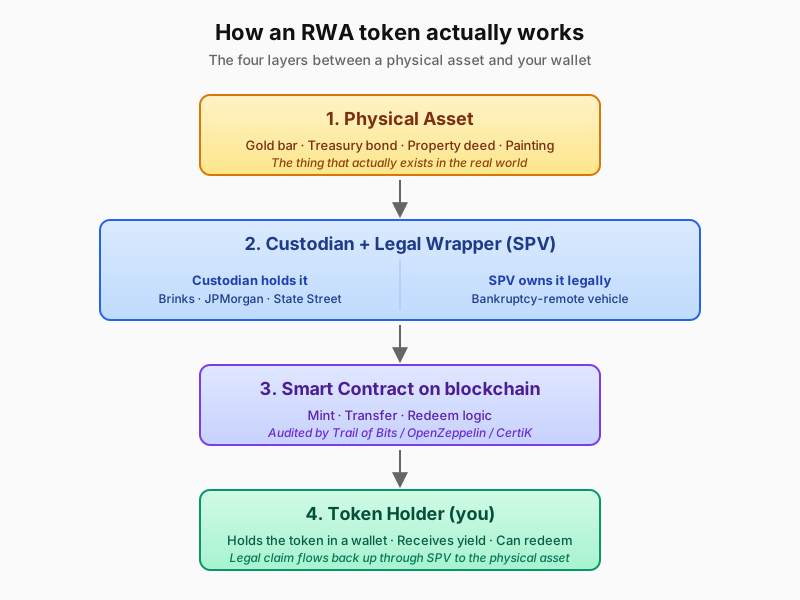
Real World Assets (RWA) is the sector bringing traditional financial assets — real estate, gold, US treasuries, art — onto the blockchain as tradeable tokens. The token holds a legal claim on the underlying asset. The blockchain handles settlement, transfer, and (in good projects) the receipt that proves you own a slice.
In 2026 this category went from «interesting experiment» to trillion-dollar market. BlackRock, Fidelity, Franklin Templeton are all running production RWA products onchain. The retail side caught up too — anyone with a wallet can hold tokenized treasuries from a $100 minimum.
🎁 Sign up to Bybit and unlock up to $30,020 in Welcome Rewards — for traders who want a centralized exchange next to their RWA holdings.
⚠️ Disclosure: this article contains an affiliate link to Bybit. The article itself is educational, not financial advice. RWA tokens are securities in many jurisdictions — check local rules before transacting.
🩸 Why this matters now?
Crypto's first decade was about creating new assets (BTC, ETH, alts) that didn't exist in the traditional system. RWA flips that — it takes assets that already exist and already have legal infrastructure (treasuries, deeds, ETFs, gold bars in vaults) and gives them a blockchain layer.
The argument for bringing TradFi assets onchain is mechanical, not ideological:
- Settlement in minutes instead of T+2 days
- 24/7 markets instead of business hours only
- Fractional access to assets that traditionally required institutional minimums
- Programmability — collateral in DeFi, automated dividend distribution, atomic swaps
By the way, this isn't a crypto-replacing-banks narrative anymore. It's banks adopting crypto rails for assets they already issue. BlackRock's BUIDL fund tokenizes a money-market product they were already running off-chain. The token doesn't change what the fund is — it changes how it's distributed and settled.
🏛️ The four main RWA categories in 2026
1. Tokenized US Treasuries
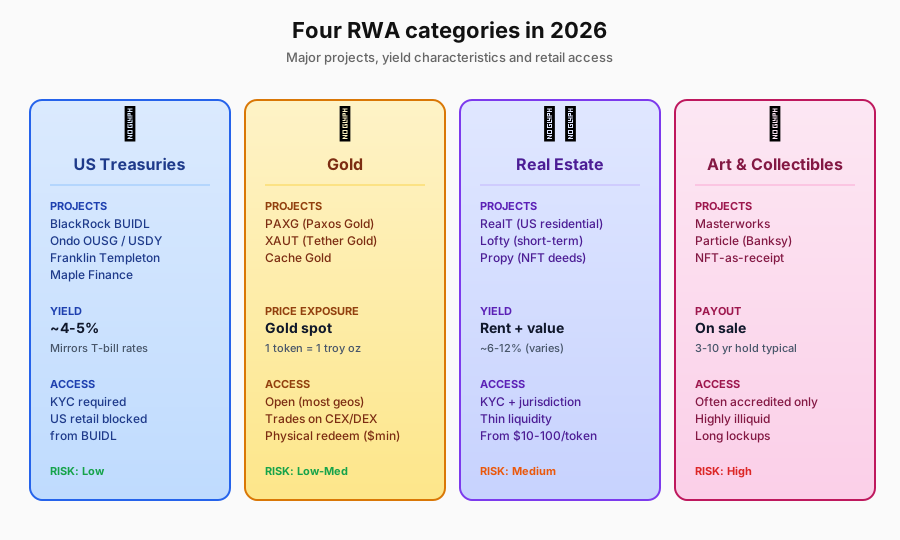
The cleanest category. Money market funds and short-duration treasury portfolios issued as on-chain tokens.
Major players:
- BlackRock BUIDL — institutional-only, runs short-term US treasuries
- Ondo Finance (OUSG, USDY) — retail-accessible (where allowed), holds T-bills
- Franklin Templeton OnChain US Government Money Fund — one of the earliest TradFi-issued tokenized funds
- Maple Finance — short-duration treasury exposure with DeFi composability
Yield: mirrors actual US treasury rates (4–5% in 2026), minus a small management fee. No yield-farming magic — it's just treasury exposure delivered to a wallet.
Access: mostly KYC required. US retail blocked from BUIDL; OUSG accessible internationally with KYC; PAXG-style commodity tokens have wider geographic reach.
2. Tokenized gold
The longest-running RWA category — tokenized gold has been live since 2019.
Major players:
- PAXG (Paxos Gold) — most-traded tokenized gold, each token = 1 troy ounce
- Tether Gold (XAUT) — similar structure, second-largest by AUM
- Cache Gold — fully on-chain accounting with vault audits
Mechanics: 1 token = 1 troy ounce held in audited vaults (Brinks, LBMA-certified). You can redeem the token for physical gold above certain minimums.
Use case: wallet-based gold exposure without paper-ETF wrappers or ETF management fees, with the optionality of physical redemption.
3. Tokenized real estate
The most fragmented category. Fractional ownership of property cash flows packaged as tokens.
Major players:
- RealT — US residential properties tokenized into ~$50 fractions
- Lofty — short-term rental properties, AI-managed
- Propy — primarily transaction infrastructure, also issues NFT deeds
Mechanics: an SPV holds the deed, issues tokens representing fractional ownership and right to rent income. Tokens trade on niche DEXs or platform-native exchanges.
Caveat: liquidity is thin compared to treasuries or gold. Selling a tokenized real estate position can take days or require accepting a 5–15% discount to NAV.
4. Tokenized art and collectibles
The smallest but growing category. Fractional ownership of fine art, watches, vintage cars.
Major players:
- Masterworks — paintings (Picasso, Basquiat) split into shares
- Particle — fractional Banksy, Warhol holdings
- Various NFT-as-receipt projects for physical art
Mechanics: the platform buys the physical piece, creates an SPV, issues tokens. The platform sells the piece after a holding period (typically 3–10 years); proceeds distributed to token holders.
Honest take: more illiquid and speculative than the first three categories. Treat as long-duration alternative exposure, not as a yield product.
🏦 Why BlackRock and Fidelity joined?
The institutional entry into RWA in 2024–2026 wasn't driven by ideology. It was driven by cost structure and client demand.
Cost side: traditional securities settlement costs roughly $10–20 per trade across the full stack (broker, custodian, CSDP, clearinghouse). Blockchain settlement for a tokenized version of the same instrument costs cents. For institutions running billions in AUM, this isn't a 5% saving — it's an order-of-magnitude saving.
Client side: family offices and crypto-native funds were demanding TradFi-asset exposure that could plug into their existing on-chain infrastructure. Owning a token that pays treasury yields directly to a wallet is operationally simpler than maintaining a parallel TradFi custody account.
BlackRock's CEO publicly said tokenization is «the next generation for markets». That's institutional language for «we're committing capital and headcount to this». Fidelity, JPMorgan, BNY Mellon, State Street all followed within 12 months. The infrastructure question moved from «if» to «which chains and which standards».
⚠️ Custodial risk — the part most retail investors miss
Smart contract risk gets all the attention. Custodial risk is what actually kills RWA positions.
Custodial risk = the physical underlying asset (gold bar, treasury bond, property deed) is held by a custodian. If the custodian fails, lies about reserves, or is hacked, your token loses its backing regardless of how perfect the smart contract is.
Real example structure: a tokenized gold project holds 100,000 oz of gold at a Brinks vault. The smart contract is audited, the code is perfect. But if Brinks gets robbed, gets sued and assets frozen, or just lies about the reserve, the token's backing evaporates. The blockchain layer can't audit physical reality.
How serious projects mitigate this:
- Proof of Reserves — regular cryptographic attestations that reserves exist
- Insured custody — Lloyd's of London or similar insuring the physical reserves
- Bankruptcy-remote SPV — the underlying assets owned by a legal entity separate from the parent company, so a parent bankruptcy doesn't drag the assets
- Independent auditors — Big Four or specialized firms verifying both reserves and SPV structure
- Redemption mechanism — ability to redeem tokens for the underlying asset, which creates economic pressure to maintain reserves accurately
If any RWA project you're considering doesn't publicly document all five — pass.
🔍 5-point checklist before any RWA position
Run every RWA token through this checklist. If any answer is «unclear» or «I don't know», don't deposit:
- Who's the issuer and where are they incorporated? — institutional-grade projects publicly disclose this (BlackRock BUIDL is a Delaware-incorporated fund). Anonymous teams = red flag for RWA
- What's the SPV / legal structure? — is the underlying asset bankruptcy-remote from the parent? Read the legal opinion document, not the marketing page
- Who's the custodian and are they audited? — recognized name (Brinks, JPMorgan, State Street) or unknown counterparty? When was last audit?
- Where are smart contract audits published? — Trail of Bits, OpenZeppelin, CertiK reports should be public PDFs linked from the project site
- What are the redemption mechanics and any restrictions? — can you actually redeem the token for the underlying? What's the minimum, fees, lock-up?
By the way — this checklist is the same logic institutional allocators apply. Retail tends to skip steps 1–5 entirely and look only at advertised yield. That's how positions get wiped.
🎯 How retail can actually access RWA
The honest answer depends heavily on jurisdiction:
Easy access (most countries):
- Tokenized gold (PAXG, XAUT) — buy on Bybit, Binance, Uniswap; no jurisdiction blocks for most
- Stablecoin yield via RWA-backed products (e.g. Maple, where allowed)
Restricted access (US, EU retail, some Asia):
- Tokenized treasuries (BUIDL, OUSG) — usually requires KYC + accredited investor status in US, professional investor status in EU
- Tokenized real estate — most platforms require KYC + jurisdiction check + sometimes accredited investor
What to avoid regardless of jurisdiction:
- Projects promising 10%+ on «tokenized real estate» without transparent loan books — usually hides credit risk or rehypothecation
- Anonymous teams claiming custody of physical assets — no recourse if reserves don't exist
- «RWA» tokens that don't actually have a legal claim on the underlying (whitepaper says it does, but the token contract has no enforcement mechanism)
For long-term holdings outside the trading account, regardless of whether they're RWA tokens or crypto-native, a hardware wallet matters — same principle of keeping recovery off-exchange.
If you're getting started with crypto trading infrastructure first, walk through the Bybit registration guide and P2P funding tutorial before going deep into RWA. Get the boring stuff right before the complex stuff.
⚖️ Final disclaimers — please read
This is educational content, not financial advice. RWA is a legitimate sector with institutional adoption, but it carries specific risks that crypto-native assets don't:
- Securities classification. Tokenized treasuries, equities, and real estate fractions are securities in most jurisdictions. Securities laws apply. KYC, accreditation, country restrictions are real
- No yield guarantees. RWA «yield» comes from underlying assets that have their own risk (treasury default risk is near-zero but not zero, real estate has vacancy and default, gold has price volatility)
- Custodial risk persists. No amount of smart contract audits can verify that physical gold actually exists in a vault. Trust requires institutional-grade attestations, not just code
- Legal recourse varies by jurisdiction. If something goes wrong, you may have legal recourse in your country, or you may not. Token cross-border claims are still being tested in courts
Make your own decisions. Do your own research. Don't allocate capital you can't afford to lose in any frontier sector — including ones backed by BlackRock.
Watch the full video walkthrough on YouTube — same content with the categories breakdown explained in detail.
Register via my link
Sign up to Bybit and unlock up to $30,020 in Welcome Rewards
Frequently asked
Are RWA tokens classified as securities? Can I even buy them from my country?+
Most tokenized US treasuries, equities, and real estate fractions are classified as securities by US, EU, UK, and Singapore regulators. That means securities laws apply — KYC, accreditation requirements, geographic restrictions. Many of the top RWA projects (BlackRock BUIDL, Ondo, Backed Finance, Maple) restrict access from US retail, EU retail without qualified investor status, or have country-specific blocks. Always check the project's jurisdiction page before assuming you can buy. Tokenized gold (PAXG, Tether Gold) and some commodity tokens have wider availability since gold isn't a security in most jurisdictions.
If the issuer goes bankrupt, do I get my money back?+
Depends entirely on the legal structure. A properly structured RWA token has the underlying asset held in a bankruptcy-remote special purpose vehicle (SPV) — meaning if the issuing company fails, the underlying treasury or gold or real estate is owned by the SPV and ringfenced from the parent's creditors. Token holders have a direct claim on the SPV assets. This is the standard for institutional-grade RWA (BlackRock BUIDL, Ondo OUSG, Backed bTokens). For smaller or unaudited projects — there may be no SPV, no bankruptcy remoteness, and your tokens are essentially unsecured claims against a company. Read the legal documentation before depositing.
Is the yield on tokenized treasuries (4-5%) actually real?+
Yes for the institutional-grade ones — BlackRock BUIDL passes through actual US Treasury yields minus a small management fee, Ondo OUSG holds short-duration T-bills directly. The «yield» you see is the same yield a money market fund holding the same paper would pay. It's not magic, it's just delivering treasury exposure to a blockchain wallet. Where yield gets suspicious: any project promising 10%+ from «tokenized real estate» or «tokenized credit» without transparent loan books. High yield on RWA usually means hidden credit risk or rehypothecation.
How is tokenized real estate different from a regular REIT?+
Conceptually similar — fractional exposure to property cash flows. Differences: (1) settlement — tokens settle in minutes vs days for REIT shares; (2) secondary market — tokenized real estate trades on DEXs 24/7 if liquidity exists, REITs are exchange-hours only; (3) minimum size — RWA fractions can go down to $10–100 per token, REIT minimums are usually higher; (4) regulatory wrapper — REITs have decades of established law, tokenized real estate is newer with more legal ambiguity. The trade-off: tokenized real estate offers flexibility, REITs offer regulatory clarity.
What's the difference between custodial risk and smart-contract risk?+
Custodial risk = the physical underlying asset (gold bars, deed to property, treasury bond) is held by a custodian (Brinks, JPMorgan, etc.). If the custodian fails, lies about reserves, or is hacked, the token loses backing regardless of how perfect the smart contract is. Smart-contract risk = bugs in the on-chain code that issues, redeems, or transfers the token. Both can wipe out your position independently. Institutional RWA addresses custodial risk via Proof of Reserves audits + insured custodians. Smart-contract risk is addressed via formal audits (Trail of Bits, OpenZeppelin, CertiK) and bug bounty programs. Check for both before committing capital.
Can I trade RWA tokens 24/7 like crypto?+
Technically yes — the tokens are on-chain and can be transferred any time. Practically — liquidity dries up on weekends and overnight US hours since most institutional market-making activity follows traditional markets. Spreads widen, large orders cause slippage. For small positions ($1k–$10k) you can trade anytime. For meaningful size ($50k+) you'll get better fills during US market hours when AP (authorized participant) flows are active. This is the «hybrid liquidity» characteristic of RWA — 24/7 access but with traditional-market liquidity rhythm.
What percentage of a crypto portfolio should be in RWA?+
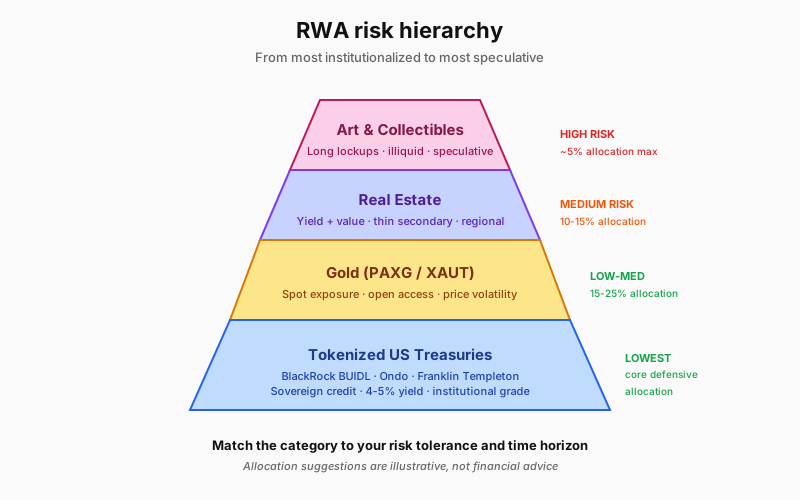
This is not financial advice and depends entirely on your goals. But here's the framing most institutional allocators use: RWA = the «defensive» portion of a crypto portfolio, equivalent to bond allocation in TradFi. If you're trying to reduce drawdown during BTC bear cycles while staying onchain, allocations of 10–30% to tokenized treasuries or stablecoin yield make sense. If you're targeting maximum crypto upside, RWA is the wrong instrument — stick to BTC, ETH, alts. RWA doesn't replace crypto, it complements it. Match the tool to the goal.
Want a review like this for your project?
YouTube review + Telegram + an evergreen blog article — EN · ES · RU-CIS markets. Real audience, verifiable results.