· 1442 words · 7 min
MiCA Is Live: Is Your Crypto Exchange Licensed in the EU? (30-Second Check)
MiCA is fully in force across the EU since July 1, 2026. Learn what changed, what happens to your funds on an unlicensed exchange, and how to check the official MiCA register in 30 seconds.
Honest review. Some links are affiliate links: same price for you, a small commission for the project.
Last updated: July 1, 2026 · ~7 min read
Quick answer
As of July 1, 2026, MiCA — the EU's single crypto rulebook — is fully in force. Every exchange serving EU users must now hold a CASP license or stop operating in the EU. To check yours, search it in the official MiCA register: if it's listed, it's authorized; if it's not, ESMA says its EU service must wind down and MiCA's protections don't cover your assets. Move them to a licensed platform or your own wallet before access is restricted.
🎁 Trade on a MiCA-licensed exchange — Bybit, up to $30,000 in welcome rewards (my link)
⚠️ Disclosure: independent explainer — nobody paid me for it. It links to Bybit, the exchange I personally trade on, which is MiCA-licensed (referral link; your fees stay the same). I checked my own exchange in the register before publishing.
MiCA at a glance
| Item | Detail |
|---|---|
| What it is | Markets in Crypto-Assets Regulation — the EU's single rulebook for crypto |
| In force since | July 1, 2026 (end of the transitional period) |
| Who it covers | Any platform serving EU/EEA users: custody, exchange, transfer |
| What a platform needs | A CASP license from an EU/EEA national regulator |
| Where to verify | Official MiCA register (ESMA data) — searchable at casptracker.eu |
| Authorized providers | 240+ hold a full CASP authorization (MiCA register, July 2026) |
| Extension? | No — Spain's CNMV confirmed no further extension |
| Main risk to you | On an unlicensed platform, MiCA protections don't apply to your assets |
What changed on July 1, 2026?
Until July 1 there was a transitional period: exchanges could keep serving EU users while getting licensed in parallel. That grace period is now over. From this date, the market splits cleanly in two — a platform either holds an EU license, or it has to leave. Nothing about your coins changed; what changed is which venues can legally hold them for you.
What is MiCA, and what is a CASP license?
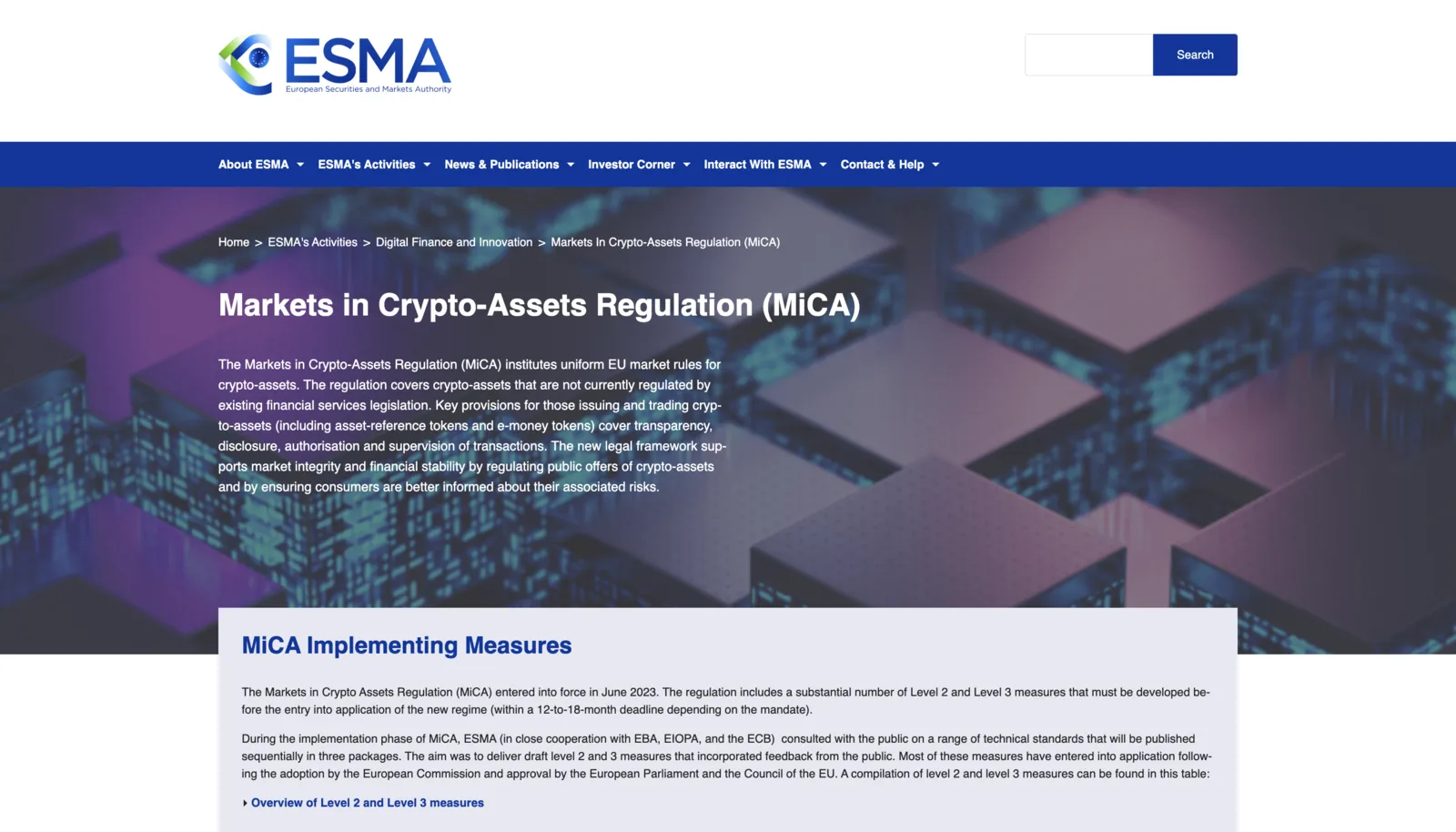
MiCA (Markets in Crypto-Assets Regulation) is the first single rulebook for crypto across the entire EU. Before it, every member state did its own thing and platforms could operate in a grey zone. Now there's one standard: to legally hold assets, exchange, or transfer crypto for Europeans, a firm needs a CASP authorization (Crypto-Asset Service Provider) from an EU/EEA national regulator. Once granted, the firm appears in the official register — which is exactly what makes "is my exchange licensed?" a question you can answer yourself in seconds.
Licensed vs unlicensed exchange — what actually changes for you
The practical difference is bigger than a badge. Here's what each type of platform can and can't do for an EU user after July 1:
| For an EU user | Licensed (CASP) exchange | Unlicensed exchange |
|---|---|---|
| Open a new account / onboard | ✅ Yes | ❌ Must stop |
| Advertise & solicit in the EU | ✅ Yes | ❌ Must stop |
| Trade & deposit | ✅ Yes | ❌ Wind-down; limited to closing/withdrawing |
| Withdraw your funds | ✅ Yes | ✅ Yes (for an orderly exit) |
| MiCA client protections apply | ✅ Yes | ❌ No |
What does ESMA require from unlicensed platforms?
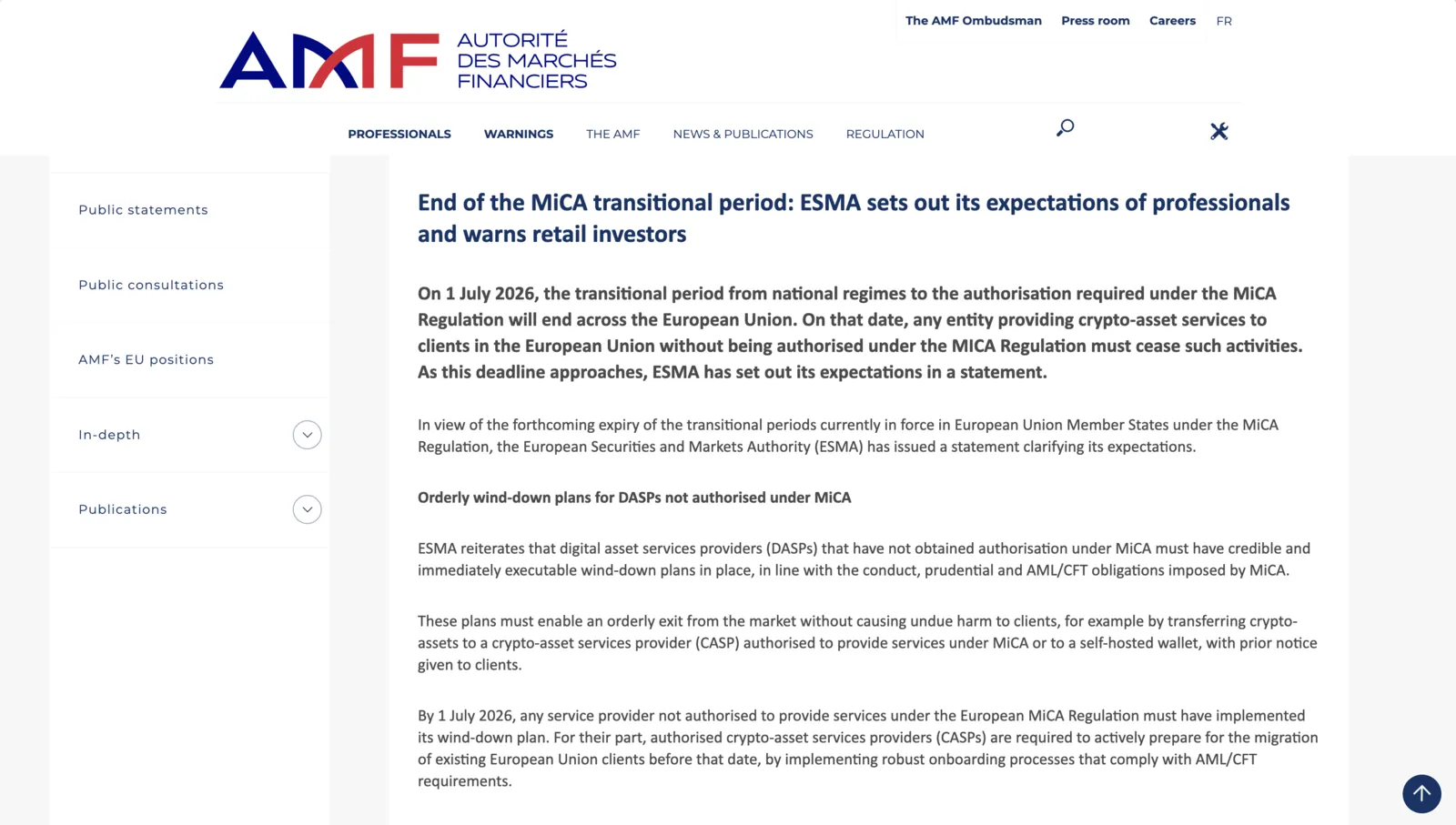
Europe's regulator, ESMA, is blunt. Firms without a CASP license must immediately stop onboarding new EU clients, stop all advertising and solicitation, and wind down EU services — keeping custody only for the short period needed to let users close positions or withdraw. Non-EU platforms can't get around this by soliciting EU clients from abroad, either. And the warning that matters most for your money: if you hold funds with an unauthorized provider, MiCA's protections do not extend to your assets (ESMA statement, June 2026).
How to check your exchange in the official register (30 seconds)
This is the one action worth doing this week. The register is built from ESMA's own data; the fastest way to read it is a searchable view like casptracker.eu.
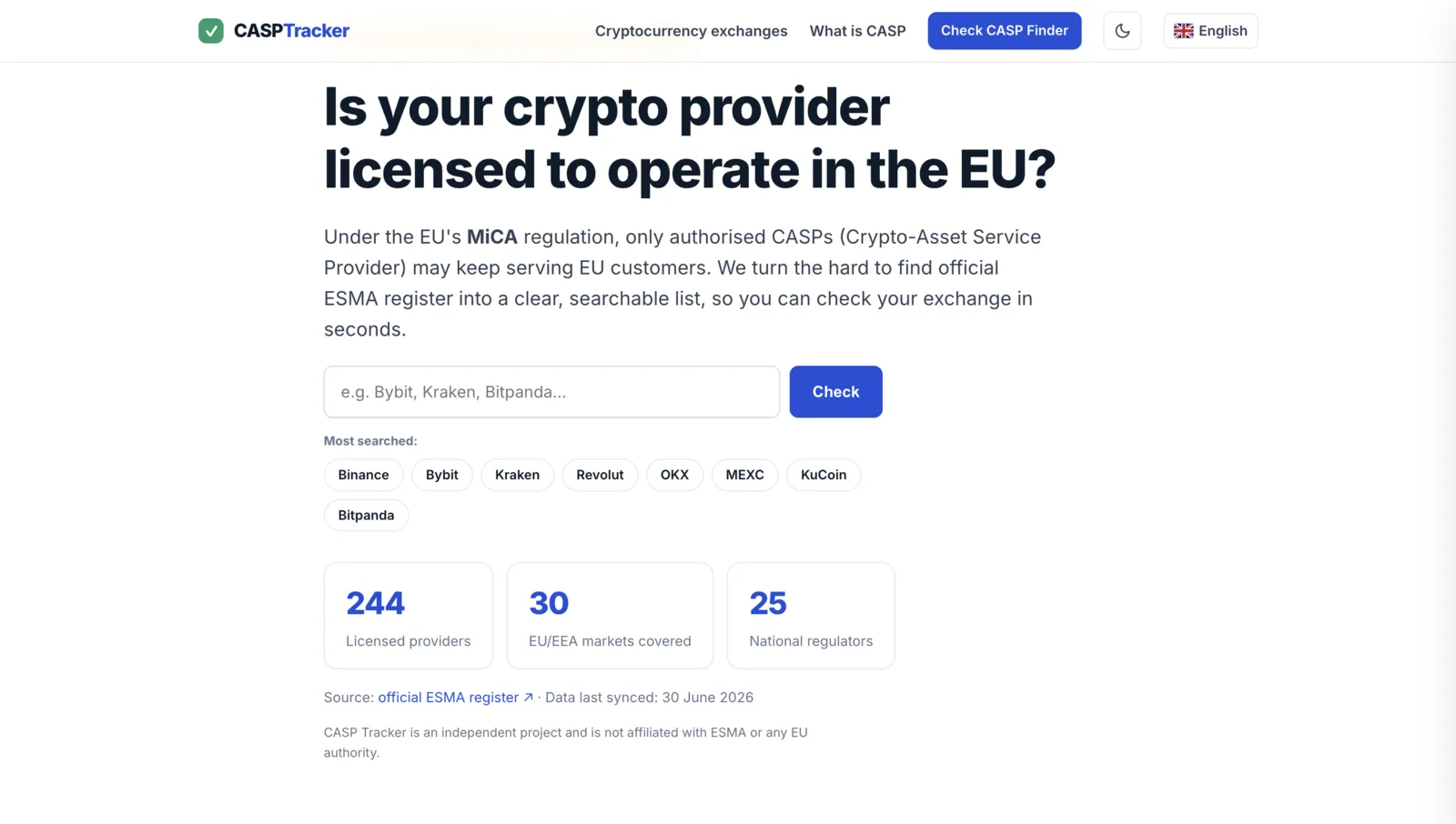
- Open the register and type your exchange's name.
- Listed? It shows the EU country and the regulator that authorized it — you're fine, and your assets sit under the rules.
- Not there? It isn't authorized to serve EU clients. Don't wait for a "deadline day" — act while withdrawals are open.
I did exactly this before publishing — searched my own exchange, confirmed the country and regulator, then moved on. It genuinely takes under a minute.
Which exchanges are already licensed?
More than 240 firms already hold a full CASP authorization (MiCA register, July 2026), and the list includes major names you'll recognize — among them Kraken, Coinbase, OKX and Bybit. The platform I use for trading is Bybit: Bybit EU received its MiCA license through Austria's Financial Market Authority (FMA) in May 2025 and operates legally across the EU/EEA.
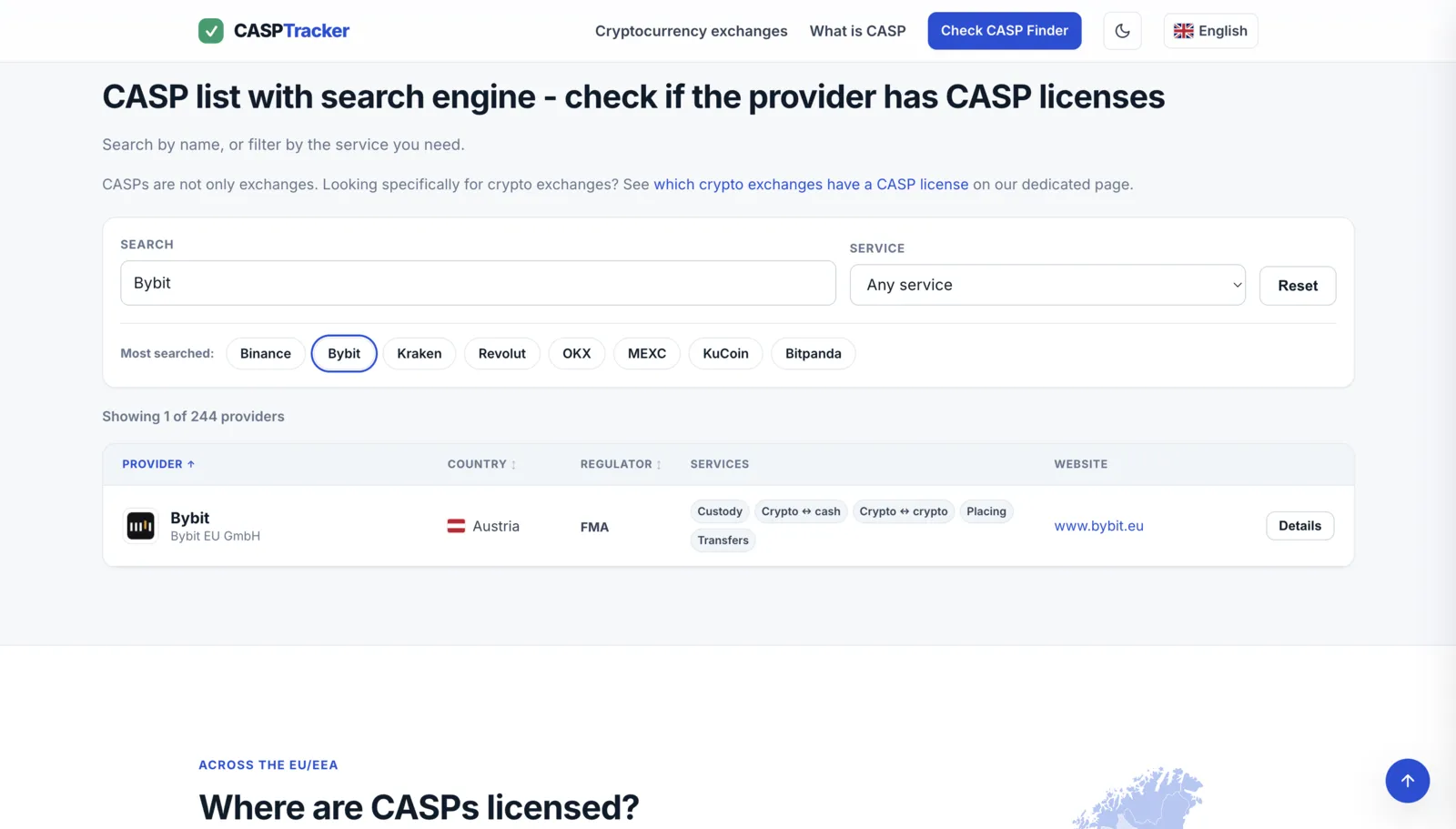
For me, that's the deciding factor now — not the bonus, not the interface, but whether the platform is actually in the register. If you want to use it: Bybit — up to $30,000 in welcome rewards (my link).
The full list: every major MiCA-licensed exchange (280 CASPs, July 2026) plus the €50k–€150k capital requirements — see the complete MiCA-licensed exchanges list.
Where are CASPs licensed?
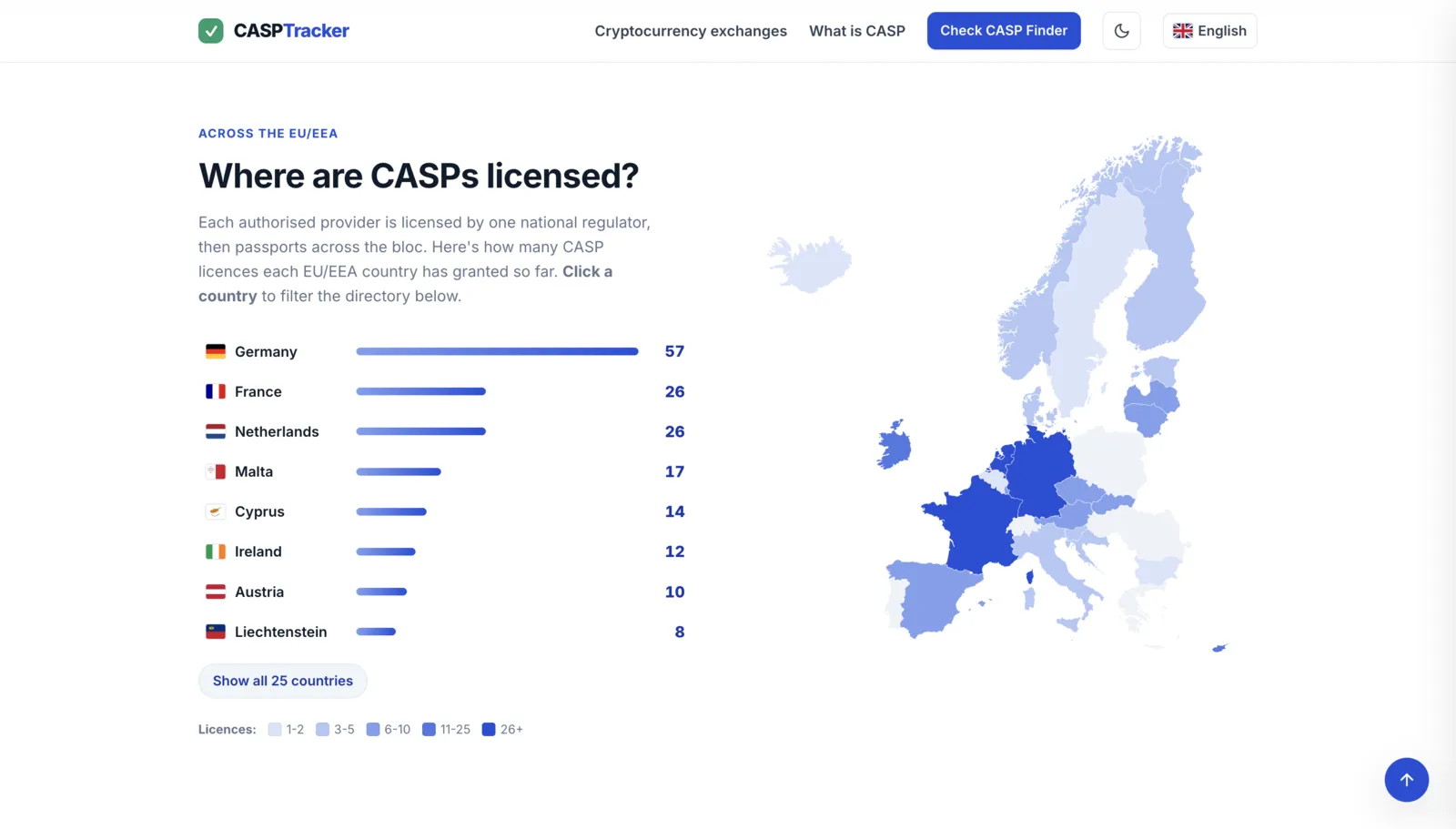
Licensing isn't spread evenly across Europe — a handful of member states host most authorized providers, led by Germany (57), France (28) and the Netherlands (26), with Malta, Cyprus, Ireland and Liechtenstein close behind (MiCA register, July 2026). Why it matters: your exchange may be authorized in a country you've never dealt with — that's normal, because a CASP license "passports" across the whole EU/EEA.
If your exchange isn't listed: licensed platform or self-custody?
You have two clean options — and they solve different problems:
| Move to a licensed exchange | Move to a self-custody wallet | |
|---|---|---|
| Who holds your keys | The exchange (custodial) | You (non-custodial) |
| Trade / convert easily | ✅ Yes | ⚠️ Needs a DEX / on-ramp |
| Under MiCA rules | ✅ Yes | N/A (you are the custodian) |
| Best for | Active traders who want to keep trading | Long-term holders who want full control |
| Main risk | You trust the venue (so pick a licensed one) | You're responsible for your seed phrase |
There's no single right answer — active traders usually move to a licensed exchange; long-term holders often prefer a hardware/non-custodial wallet where only they hold the keys. Many people do both: keep a trading balance on a licensed venue and cold-store the rest.
Will the deadline be extended?
Many assume "they'll extend it, like always." Not this time. Spain's regulator (CNMV) has already stated officially there will be no extension (CNMV), and ESMA has signaled that national regulators will act in a coordinated way against unauthorized providers after the cutoff. This is a fixed date with real consequences, not a passing headline.
Your 30-second checklist
- Open the MiCA register and find your exchange.
- Not listed? Move your assets to a licensed platform or your own wallet while access is open.
- Make it a habit: before funding any new platform, check the license first — not the reviews, not the ads.
July 1 is the moment Europe brings real order to crypto for the first time. The people who prepared in advance win; the ones who find out after the fact don't. Five minutes today is cheap insurance.
🎥 Prefer to watch? Full breakdown on YouTube — with the register on screen.
Risk & disclaimer
This is educational information, not financial or legal advice. Regulations and register entries change — verify your exchange directly in the official register before acting, and never move funds under time pressure without double-checking the destination address. Always do your own research (DYOR).
Sources: MiCA register (casptracker.eu) · ESMA — MiCA · Spain, CNMV · Bybit license (FMA, Austria)

Frequently asked
How do I check if my crypto exchange is licensed under MiCA?+
Search your exchange by name in the official MiCA register, which is built from ESMA's data (a fast searchable view is casptracker.eu). If it appears with an EU authority and a CASP authorization, it's licensed. If it's missing, it is not authorized to onboard EU clients — move your assets to a licensed platform or your own wallet.
What happens to my money if my exchange is not MiCA-licensed?+
An unlicensed platform must stop taking new EU clients and wind down EU services; you're generally left able to withdraw or close positions only. Critically, ESMA warns that MiCA's client protections do not apply to assets held with an unauthorized provider — so the safeguard you might assume you have isn't there.
What is a CASP license?+
CASP stands for Crypto-Asset Service Provider. Under MiCA, any firm that custodies, exchanges, or transfers crypto for EU users needs a CASP authorization from an EU/EEA national regulator, which then appears in the official register.
Will the MiCA deadline be extended past July 1, 2026?+
No. Spain's regulator (CNMV) confirmed officially there will be no extension, and ESMA has said national regulators will act in a coordinated way against unauthorized providers after the deadline.
Is Bybit licensed under MiCA?+
Yes. Bybit EU received a MiCA CASP authorization through Austria's Financial Market Authority (FMA) in May 2025 and appears in the official register, so it can legally serve clients across the EU/EEA.
Do I have to sell my crypto because of MiCA?+
No. MiCA is about where you hold and trade, not about forcing sales. If your exchange is unlicensed, you move your assets to a licensed venue or self-custody — you don't need to liquidate.
Want a review like this for your project?
YouTube review + Telegram + an evergreen blog article — EN · ES · RU-CIS markets. Real audience, verifiable results.